Friday, October 5, 2012

Theif!

Maybe you remember those pictures of those cute Euphorbia 'Ascot's Rainbow' I put in the main fall annual display. They looked something like this.


 Well I came in the next day to throw down some mulch and instead I found this...


You would be amazed how much plant material disappears after its put in the ground. There really is nothing more frustrating then correctly estimating the required number of plants, planting them so that they're even and then coming in the next day to find them missing. If you're going to steal plants, please save me the work and steal them before I plant.


This is why we can't have nice things.

Friday, September 28, 2012

New Containers

Here's one of our new containers for the fall. The lighting in this picture is just awesome.

Gaura ‘Crimson Butterflies,’ Heucha ‘Citronelle,’ a variety of Begonias, Lysimachia 'Persian Chocolate,' Synadenium grantii, and Streptocarpella 'Concord Blue.'

Cuties.

Friday, September 21, 2012

Fall annuals part 2

So my last post covered what went in our main bed display. Let's see what went into the smaller beds.

A combination of Violets and Pansy's were added around the playground. The four sides were configured to match the four suits of a deck of cards. I'll take another picture when they're all in bloom. I'm not sure the picture is going to be as successful as I would really like.

Japanese blood grass, Imperata cylindrica 'Rubra', gives great fall color. It's been in the park for a year and so far no reversions or invasive tendencies. If anything I think the original stock was sort of weak. =/


We played around with some standards this year. Here we have a Coleus and Abutilon pruned up making everything super formal. Its an interesting change. The Euphorbia 'Blackbird' looks great in the bottom picture.


Sunday, September 16, 2012

Finally an update

I suppose it should be time for reflection, now that summer is coming to a close. I can't believe fall starts next week. I have no idea what I've been doing all summer. I just don't know where the time went. Maybe some photos will help jog my memory or something.

Unfortunately all that is coming to mind right now is the million shades of coleus I just added to the fall display.


 yep.. its still going..


I've spent the last two weeks putting in the fall annuals at work. In some ways I think the fall displays are always the most interesting and creative out of all the ones we do. For the most part I can thank industry standards for that. Mums, asters, and cabbage have dominated fall displays for as long as I can remember. Maybe sometimes someone throws some grasses or millet in there but for the most part, all fall displays usually look the same. This makes my job easier really because there are hundreds of fall flowering plants that are uncommon in annual plantings. If you throw in some brightly colored foliage plants and consider how large your material will be because of the lateness of the season, you can have a kick ass fall annual display with little effort. I'm far enough south where I don't have to worry too much about early morning frosts before bulbs have to go in but far enough north where fall is still a very distinct season. It's an awesome combination.


This bed has been going all year, but check out this Solanum quitoense.

 
I think we're getting fruit soon.


My job requires that I install four seasonal displays and realistically, the fall one is the least necessary. Fall material always comes at an awkward time between when the summer material is finally fully established and thriving and bulbs are almost ready for installation. Everything needs to look good when it goes in because it really doesn't have any time to grow before it needs to be pulled out. =/ what a waste.

In any case, this is what it looks like this year.


It's certainly bright enough. I can't wait to see the Nemesia and Diasciain bloom. It's going to be so full of color.


Here's some close ups on those Euphorbia 'Ascot's Rainbow.'


The rest will have to wait for now. I can't be including too much eye candy all at once. =)

Friday, August 10, 2012

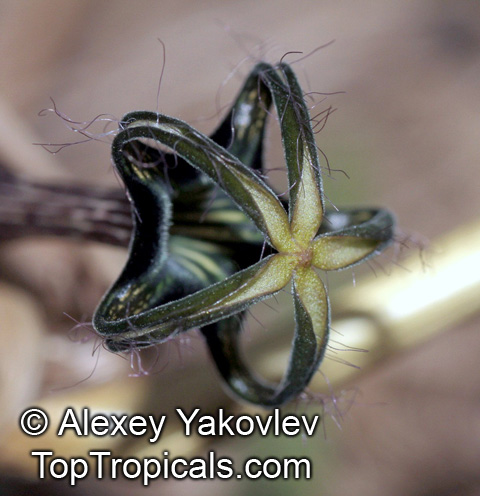
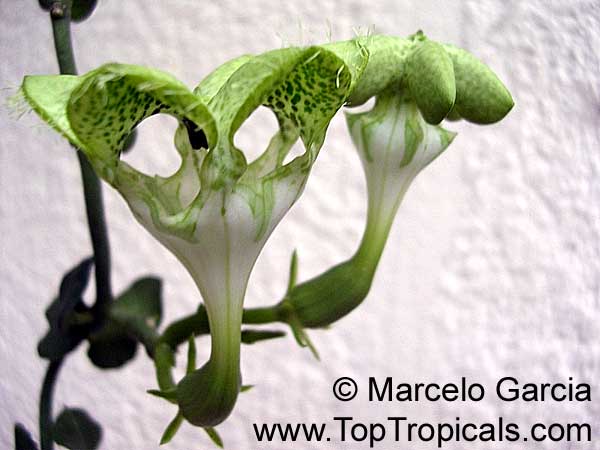
Ceropegia woodii

I'm totally in love with Ceropegias right now. After having my Ceropegia woodii for only a few months, the plant has grown at least four feet and is in bloom. The leaves are beautiful, the flowers are weird. I love it.


Of course I've started looking into other varieties of this beauty in hopes of expanding my collection. Much to my disappointment, I've found that most aren't available on the market. I guess I need to find cuttings of the tri color somewhere and then try to get seed of other varieties so I can get some in circulation here. How can you not love the geometry of these flowers? They look like something out of a Stephen King book.

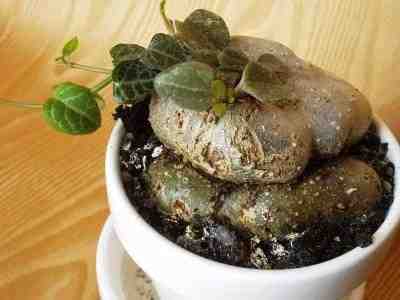
They also form a Caudex. I'm so in love....

Friday, August 3, 2012

Hoya Baby


So after much waiting and debate, my Hoya has finally bloomed.


The flowers are fairly standard for a Hoya, white with reddish centers. Hoya flowers are just amazing in general so I'm very pleased that it bloomed this year. I originally believed this to be Hoya carnosa 'Krinkle' and over the past two years its sort of slowly lost its crinkle. I guess I was hoping that it would have some sort of weird flowers to prove to me exactly which Hoya I have. Alas that's not really the case. The flowers are standard for a carnosa, so for all I know it just had some deformed leaves when I got it at trade. =/

 I'm mean. I make all of my vines grow up instead of hang down.

Still its nice to have something in flower again since my Euphorbia milii has decided that its finished for a bit. I'm sure my cutting off 1/3 of the plant so we could install the window fan had nothing to do with that....

Friday, July 27, 2012

Eastern Conference Additions Sansevieria

People love to abuse Sansevierias. I can't tell you how many of these I find abandoned in the park every year. Its an embarrassing number. It seems to me that people just love to hate them. Sanseverias are such architectural plants that require little care and produce beautiful specimens with very little upkeep. In general, they are easy to propagate and come in so many beautiful varieties that the houseplant trade is only finally starting to recognize.

I get why people seem to dislike sansevierias, they're boring, you don't have to baby them, the flowers aren't too showy. But when you're gardening full time and living in tight quarters, the appeal of sanseverias take on an entire new playing field.

I guess my interest in them really started about a year and a half ago when my co-gardener gave me one of those Saneveria cylindricas that have been pretty popular in containers around the city. It wasn't in great shape and I can only boast one added leaf since I acquired it from him. Around the same time I checked out the Sansevieria trifasciata that I propagated in college and found that it had really started taking off and it had flowered.

I checked out some other varieties on Glasshouseworks, saw that there were so many awesome different forms. I saw some of Longwood garden's giant sansevierias in their silver garden. I read this excellent book (you should read it here for free). And next thing I knew, I had purchased 2 dwarf varieties at the Philly flower show and found myself looking for other varieties.

 
Hooked again.. drat.

At some point I had noticed Sansevieria pinguicula and I just couldn't believe it wasn't an agave. I love agaves and now I love sansevierias. It seemed like a match made in heaven. Sansevieria pinguicula is often referred to as the walking sansevieria since it does something unique among sansevieria, it produces stolons instead of rhizomes. The rooting habit gives the plant the illusion of growing on stilts.

This one is taking some baby steps.

Pinguicula means fat, referring to the plant's fleshy leaves. The leaves of pinguicula contain the deepest stomata of any Sansevieria and they are still exceedingly rare in the trade.